

Whiteflies can cause significant damage to greenhouse crops, affecting plant health and produce quality. Effective management depends on correctly identifying the species, detecting infestations early and using the right combination of biological and chemical controls. In this article, we share practical guidance to help you better manage whiteflies in your crop with an Integrated Pest Management (IPM) program.
Whiteflies and their impact
Whiteflies are pests of a wide range of plants grown in protected cropping environments. Despite their name, whiteflies are more closely related to aphids, scales and mealybugs (order Hemiptera) than to true flies (order Diptera). They have piercing–sucking mouthparts, like aphids, rather than the sponging or piercing mouthparts found in true flies.
Whiteflies are primarily feared for causing the honeydew–sooty mould cascade, which reduces photosynthesis and the marketability of the produce. Aphids, soft scales and mealybugs cause the same type of damage in crops.
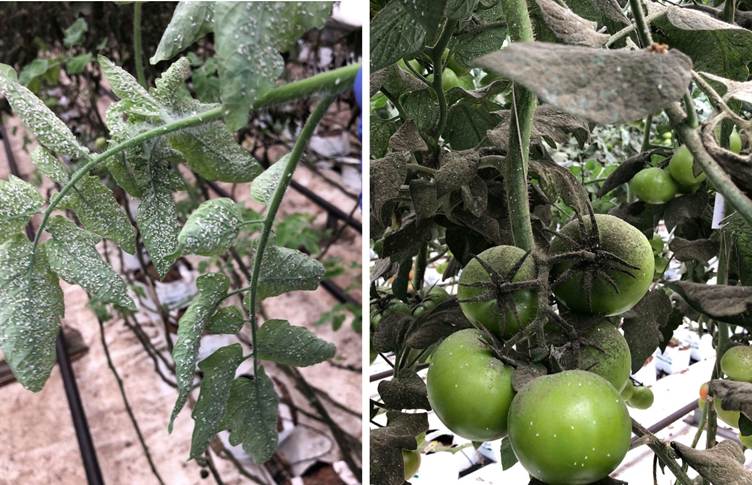
There are hundreds of whitefly species worldwide, but two are economically important in protected cropping: the Greenhouse Whitefly (GHW, Trialeurodes vaporariorum) and the Silverleaf Whitefly (SLW, Bemisia tabaci). Although they appear similar, they are not closely related. Both GHW and SLW occur in Australia, and it is important to correctly identify which species is present on your property.
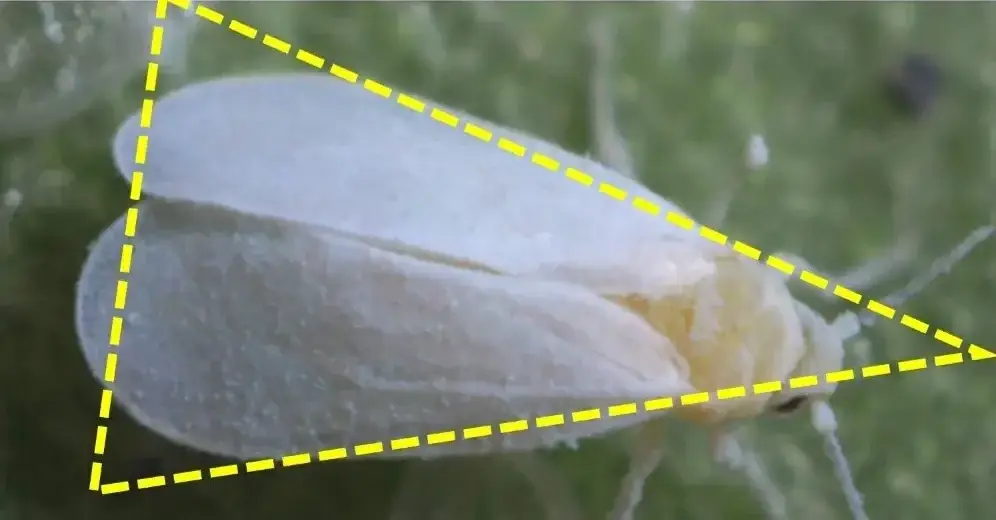
(Image: Biobest Academy).
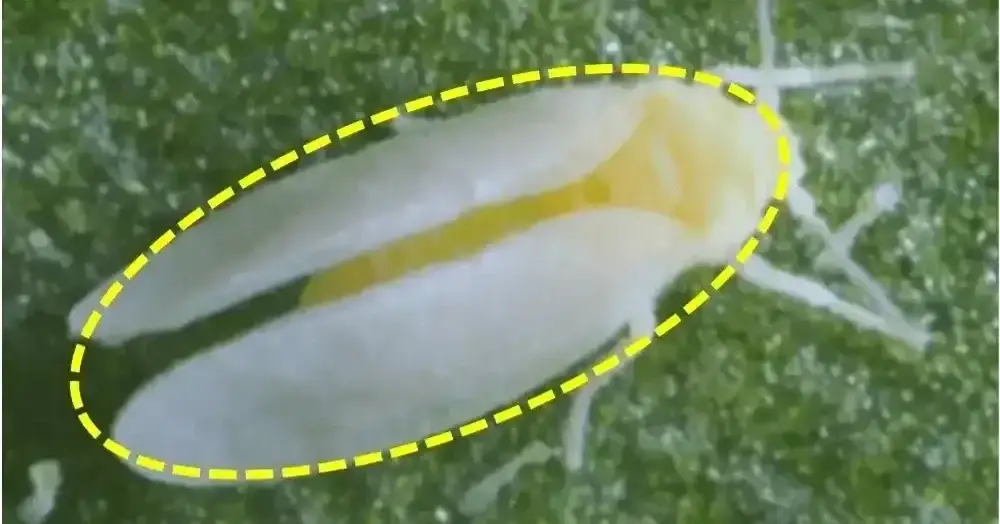
(Image: Biobest Academy).
Regular crop scouting by experienced staff or consultants makes a substantial difference. Knowledge is power, and many resources are available to strengthen scouting teams. The Biobest Academy offers a range of IPM‑focused training materials for growers.
Globally, SLW is a far more serious pest than GHW. SLW can transmit more than 100 different plant viruses, whereas GHW transmits far fewer. SLW can also induce physiological disorders in plants, such as irregular ripening in tomatoes. SLW prefers warmer temperatures and is more likely to be present in tropical and sub-tropical zones. GHW is more prevalent in temperate climates. Both are suited to greenhouse conditions.
Fortunately, Australian growers have access to several commercial biological control agents that perform well under warm conditions, including Encarsia formosa (GHW & SLW), Eretmocerus warrae thrives in warm environments (GHW only), and Eretmocerus hayati (specialist parasitic wasp targeting SLW). The predatory bug Nesidiocoris tenuis (Nesidiocoris) consumes all life stages of both GHW and SLW. Additionally, the predatory mites Typhlodromalus lailae and Typhlodromips montdorensis can assist in controlling both species in crops other than tomatoes.
Methods to control whiteflies
Integrated Pest Management (IPM) of whiteflies relies on a combination of control measures. Give your whitefly biological control program the best chance of success by following the advice below.
Sticky traps and rolls
Yellow sticky traps are useful for monitoring whitefly levels but will not provide meaningful control in large commercial farms. High numbers of sticky traps can, however, help suppress whitefly populations in small compartments at research facilities or in small but high‑value greenhouses (e.g., medicinal cannabis, ornamentals, flowers, and nurseries).
Yellow sticky rolls can make a significant difference in larger operations by delaying the inevitable population surge. Sticky rolls must be installed before planting. Ensure enough are used, ideally in every row, not only along the perimeters. These physical control tools will not achieve 100% control and must form part of an integrated program that incorporates beneficial insects and targeted chemical applications only when necessary.
Scouting
Whiteflies can rapidly become a serious problem if not detected early. Once populations are out of control, it takes far more time and effort to bring them back down. Early intervention is both easier and more economical.
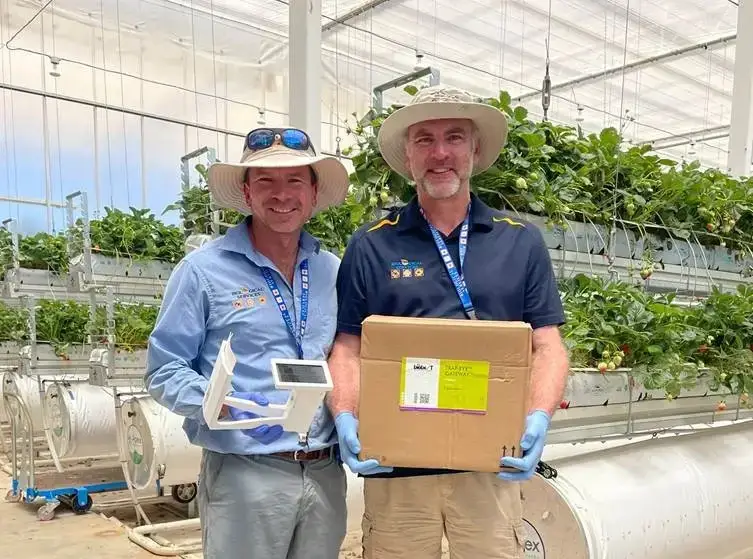
High‑tech, automated pest monitoring systems are being developed globally, helping to provide early warning which is particularly valuable for large commercial operations. These systems also help address labour shortages, high labour costs and skill gaps associated with traditional scouting. Biological Services is about to begin the first trials of the Trap‑Eye™ system from Biobest/PATS.
Whiteflies never disappear on their own
Ignoring whiteflies only allows the problem to worsen. Act aggressively on hotspots. Management options include:
- Heavy releases of beneficial insects at and around hotspot areas
- Spot‑spraying (might be required every 3-4 days for a short time)
- Installing additional sticky traps and/or sticky rolls at the hotspot
- Removing leaves with heavy whitefly egg or scale loads, placing them in sealed plastic bags and discarding them immediately.
Did you know? Larger whitefly scale will continue to develop and emerge as whitefly adults even on dying plant material, so removal must be thorough.
Establish beneficial insects as early as possible
Introduce beneficial insects early in the crop cycle, preferably before the first whiteflies are present. Adjust your IPM program as the season progresses and as whitefly pressure changes. Change the composition of whitefly parasitoids as temperatures rise: Encarsia performs better during cooler periods, while Eretmocerus excels in warmer conditions.
Cezar Moraes, Biological Services Team Leader in Western Australia and Victoria, offers valuable advice:
“You must know every week what the whitefly and your beneficial levels are. Look at the weather and change rates and composition of your release program to match the whitefly pressure.”
A place for compatible chemical sprays
There are several IPM‑compatible products available to support whitefly control. However, these sprays must be used sparingly because whiteflies develop resistance quickly.
“We have seen how these chemicals quickly lose their efficacy against whiteflies within 2–3 years of being released in Australia,” says Anita Marquart, Biological Services Team Leader based in Virginia (SA).
Jake Byrne, Biological Services Team Leader for the East Coast and Tasmania, agrees: “We really shouldn’t be overusing these products. Any growers that overuse these products assist in the development of chemical resistance. This shortens the lifespan of the product, making it difficult for everyone to control whiteflies.”
Even if a product is considered IPM‑compatible, its suitability depends on the beneficial species being used and the stage of the IPM program. It is essential to discuss all chemical sprays – including fungicides – with your IPM consultant or agronomist.
Sulphur use and its impact on beneficial insects
Many growers use sulphur pots to assist with powdery mildew control; however, running sulphur pots every night will suppress all beneficial insects and hinder the effectiveness of the IPM program.
Running sulphur pots every second evening for 4 hours is a workable compromise. This approach protects the crop from powdery mildew while still allowing beneficial insects to establish and function effectively.
Sulphur sprays can also be used with beneficial releases but should be limited to 14-21 day intervals and rotated with other fungicides. Encarsia is more sensitive to sulphur than Eretmocerus.
Final thoughts
Effective whitefly management in protected cropping depends on early action, informed decision‑making and an adaptable IPM program. By combining accurate species identification, consistent monitoring, strategic use of beneficial insects, and careful use of compatible chemical tools, growers can keep whitefly pressure under control while maintaining long‑term production sustainability. With the increasing availability of advanced monitoring technologies and robust biological control agents suited to Australian conditions, growers are now better equipped than ever to manage these persistent pests.
To learn more about the grower benefits of Integrated Pest Management and how Biological Services can help you achieve healthy and sustainable yields through the use of beneficial insects and on-site integrated pest management advice, contact us.
This article first appeared in the Autumn (2026) edition of Soilless Australia.