
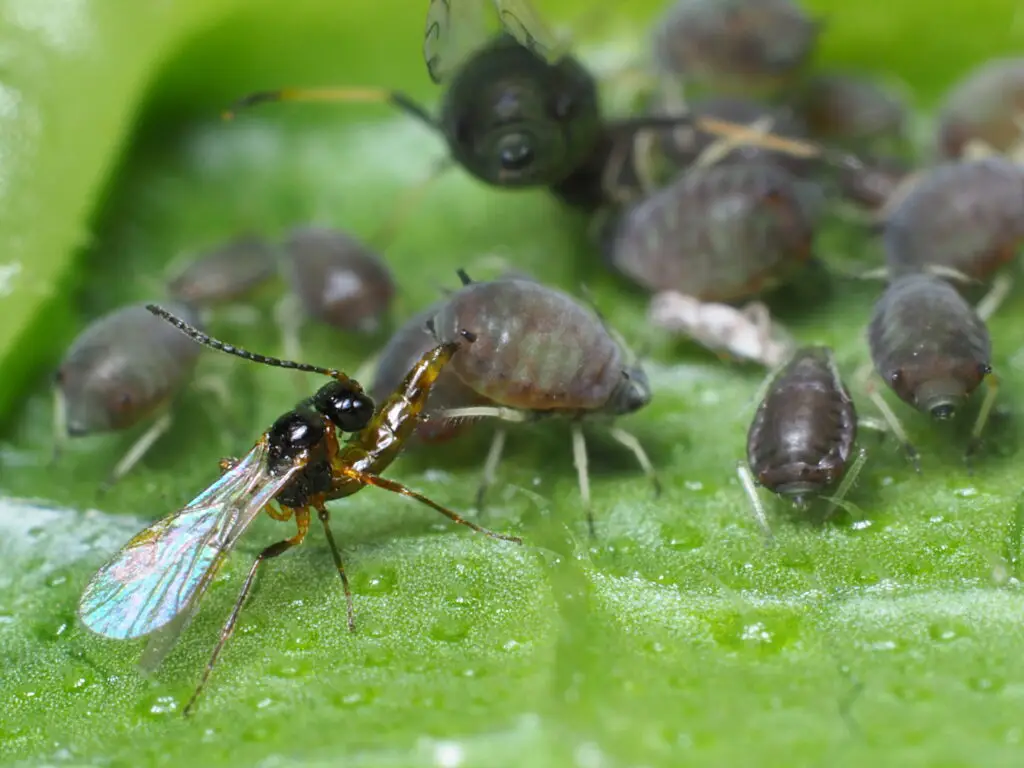
Aphids can cause significant damage to crops, and their rapid reproduction makes effective management essential. Parasitic wasps, such as Aphidius colemani (featured image above), offer a valuable biological control option, but success depends on selecting the right species and understanding the conditions that influence their performance. In this article, Biological Services’ Stephanus Malherbe and James Altmann share practical guidance to help you better control aphids in your crop with an Integrated Pest Management program.
Understanding aphid parasitic wasps
Aphids are destructive pests of both greenhouse and outdoor crops. They weaken plants by feeding on sap, spread plant viruses, and produce honeydew that can lead to sooty mould growth. Under favourable conditions, aphid populations can increase rapidly.
Integrated Pest Management (IPM) is often the most effective way to manage aphids. Many aphid species can develop resistance to insecticides, and their tendency to feed deep within plant canopies can make spray coverage difficult. As a result, parasitic wasps form the backbone of many successful biological control programs.
How do parasitic wasps work?
Most aphid parasitic wasps follow a similar life cycle. Female wasps lay their eggs inside aphids, a process that takes only a few seconds. After the egg is deposited, the aphid continues to feed and move normally for several days.
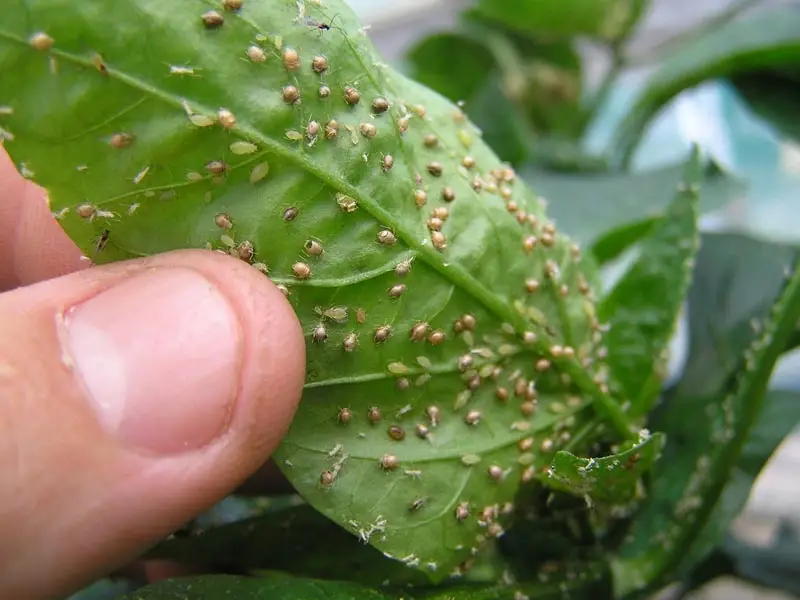
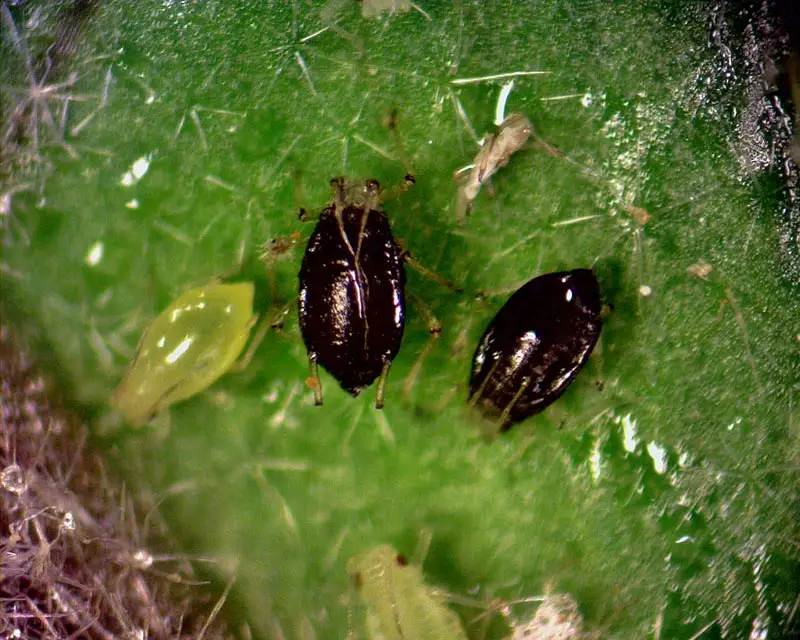
When the egg hatches, the developing larva feeds internally on the aphid, eventually killing it. During this stage, the aphid’s body swells and hardens into what is known as a mummy. Mummies resemble inflated aphids and are often bronze, brown or black in colour.
Once development is complete, the adult wasp chews a circular exit hole in the mummy and emerges ready to search for and parasitise more aphids, continuing the cycle.
Why doesn’t biological control always deliver the expected results?
The process may sound straightforward, yet biological control of aphids does not always perform as expected. There can be several reasons for this.
The ancient Chinese military strategist Sun Tzu famously said, “Know your enemy and know yourself, and you will not be defeated in a hundred battles.” The same principle applies to aphid management. A successful biological control program requires an understanding of both the pest and the beneficial insects being used against it.
In the following sections, we explore some of the key factors that influence the success of aphid biological control programs.
The first principle: Match the parasitic wasp to the correct aphid species
There is no single “silver bullet” parasitic wasp capable of controlling every aphid species. Successful biological control relies on matching the right parasitic wasp to the target aphid. This host-parasitoid relationship is often highly specific, with some parasitic wasps attacking only a narrow range of aphid species, while others have a broader host range.
Aphid size is also an important factor influencing parasitoid performance and establishment. For this reason, the first question growers should ask is: “Which aphid species are present in my crop?” Correct identification is the foundation of an effective biological control program. Once the aphid species have been identified, the most suitable parasitic wasp can be selected (see Tables 1 and 2).
Table 1. Host range and recommended crop use of commercially available aphid parasitic wasps in Australia
| Parasitic wasp | Host range | Suitable crops |
|---|---|---|
| Aphidius colemani (Colemani) | Specialist within the small to medium-sized aphid group, especially Myzus and Aphis | Greenhouses, cucurbits, capsicums, nurseries, cotton and some field crops |
| Aphidius ervi (Ervi) | Primarily attacks larger aphids, especially Macrosiphum, Aulacorthum and Acyrthosiphon | Greenhouses, ornamentals, berries, potatoes, pulses and lucerne |
| Aphelinus abdominalis (Aphelinus) | Broad recorded host range, but used against larger greenhouse and soft-fruit aphids, may also feed directly on hosts. | Greenhouses, ornamentals, berries and localised aphid colonies |
| Diaretiella rapae (Diaretiella) | Broad generalist with a particularly strong association with brassica aphids, plus some cereal aphids | Brassicas, canola, cereals, corn, and greenhouse vegetables |

Table 2: Recommended parasitic wasps for key aphid species
| Australian aphid pest | Colemani | Ervi | Aphelinus | Diaretiella |
|---|---|---|---|---|
| Bluegreen aphid (Acyrthosiphon kondoi) | Unsuitable | Primary host | Unsuitable | Possible |
| Pea aphid (Acyrthosiphon pisum) | Unsuitable | Primary host | Possible | Unsuitable |
| Cowpea aphid (Aphis craccivora) | Secondary host | Possible | Possible | Secondary host |
| Cotton / melon aphid (Aphis gossypii) | Primary host | Unsuitable | Secondary host | Secondary host |
| Foxglove aphid (Aulacorthum solani) | Unsuitable | Primary host | Primary host | Unsuitable |
| Cabbage aphid (Brevicoryne brassicae) | Possible | Unsuitable | Possible | Primary host |
| Strawberry aphid (Chaetosiphon fragaefolii) | Unsuitable | Unsuitable | Possible | Unsuitable |
| Russian wheat aphid (Diuraphis noxia) | Unsuitable | Possible | Unsuitable | Primary host/ Secondary host |
| Turnip aphid (Lipaphis spp) | Secondary host | Unsuitable | Possible | Primary host |
| Potato aphid (Macrosiphum euphorbiae) | Unsuitable | Primary host | Primary host | Possible |
| Rose aphid (Macrosiphum rosae) | Unsuitable | Primary host | Primary host | Unsuitable |
| Rose-grain aphid (Metopolophium dirhodum) | Possible | Primary host/ Secondary host | Possible | Possible |
| Green peach aphid (Myzus persicae) | Primary host | Secondary host | Secondary host | Primary host |
| Corn aphid (Rhopalosiphum maidis) | Secondary host | Possible | Secondary host | Primary host/ Secondary host |
| Oat aphid (Rhopalosiphum padi) | Primary host/ Secondary host | Secondary host | Secondary host | Secondary host |
The second principle: Match the parasitic wasp to the expected temperature range
Temperature plays a major role in the performance of aphid parasitic wasps. Each species has its own preferred temperature range, and these ranges can differ considerably (see Figure 1).
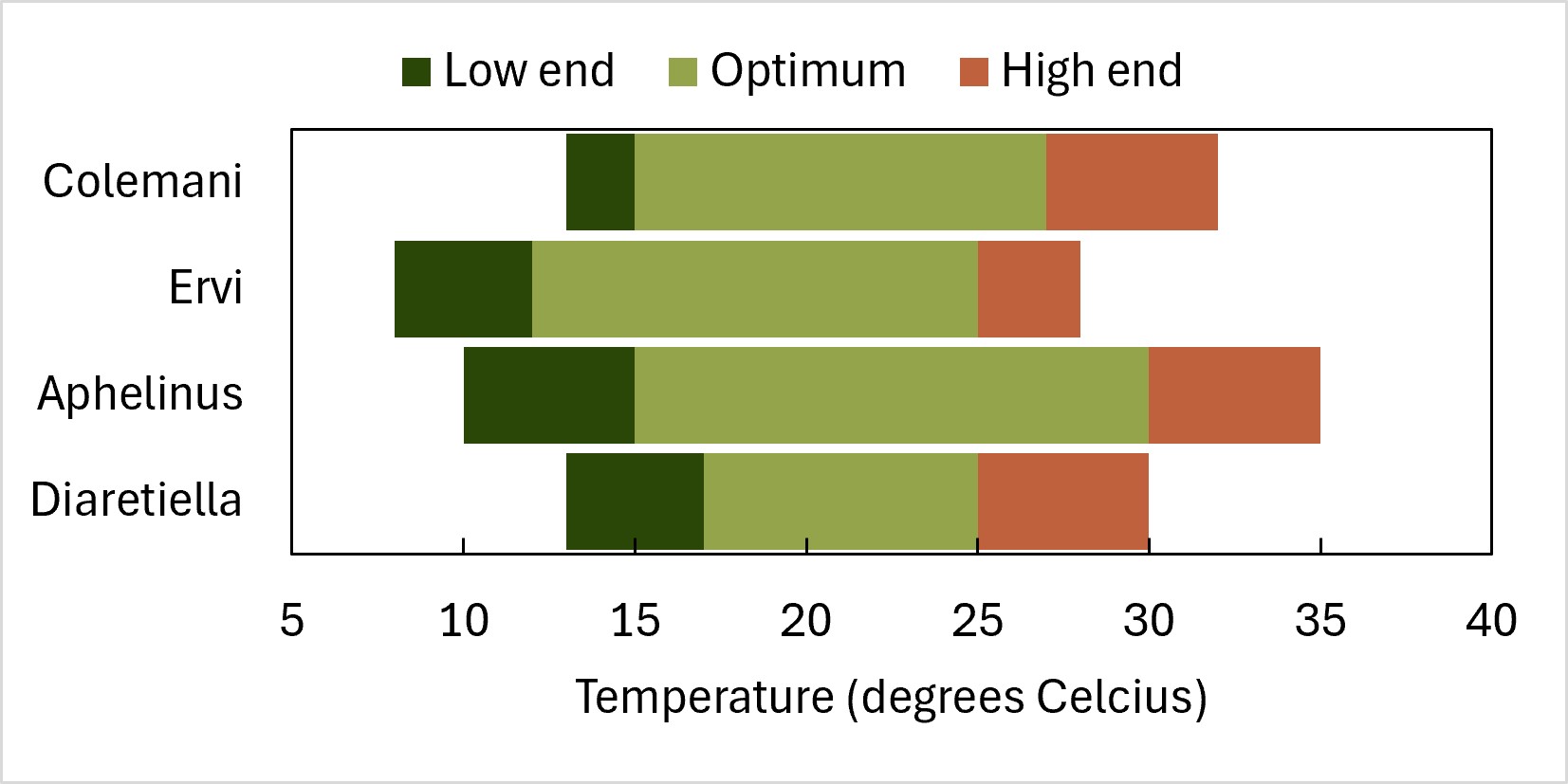
Some species perform best under cool / mild conditions, while others are better suited to warmer temperatures. Understanding these preferences can help growers select the most effective biological control agent for the season.
In practice, this may mean using one parasitic wasp species early in the season when temperatures are cooler, then switching to another species as temperatures rise during summer. Matching the parasitoid to the prevailing conditions can improve aphid control and support a more reliable IPM program.
Tip: Establish your aphid biological controls before conditions become too hot. Most aphid parasitoids are less effective during periods of extreme heat. Heat-stressed aphids also tend to be smaller, making them less suitable hosts for parasitism and reducing parasitoid performance.
Monitoring is the foundation of every aphid biological control program
Effective crop monitoring is essential for successful aphid management. The primary goal is to detect aphid activity early and accurately identify the aphid species present. This allows growers to select the most appropriate parasitic wasp for the target pest.
Once biological control has been introduced, monitoring plays an equally important role in assessing parasitoid activity and measuring the effectiveness of the overall program. Regular scouting provides the information needed to determine whether additional releases of parasitic wasps are required or whether targeted applications of selective aphicides may be necessary.
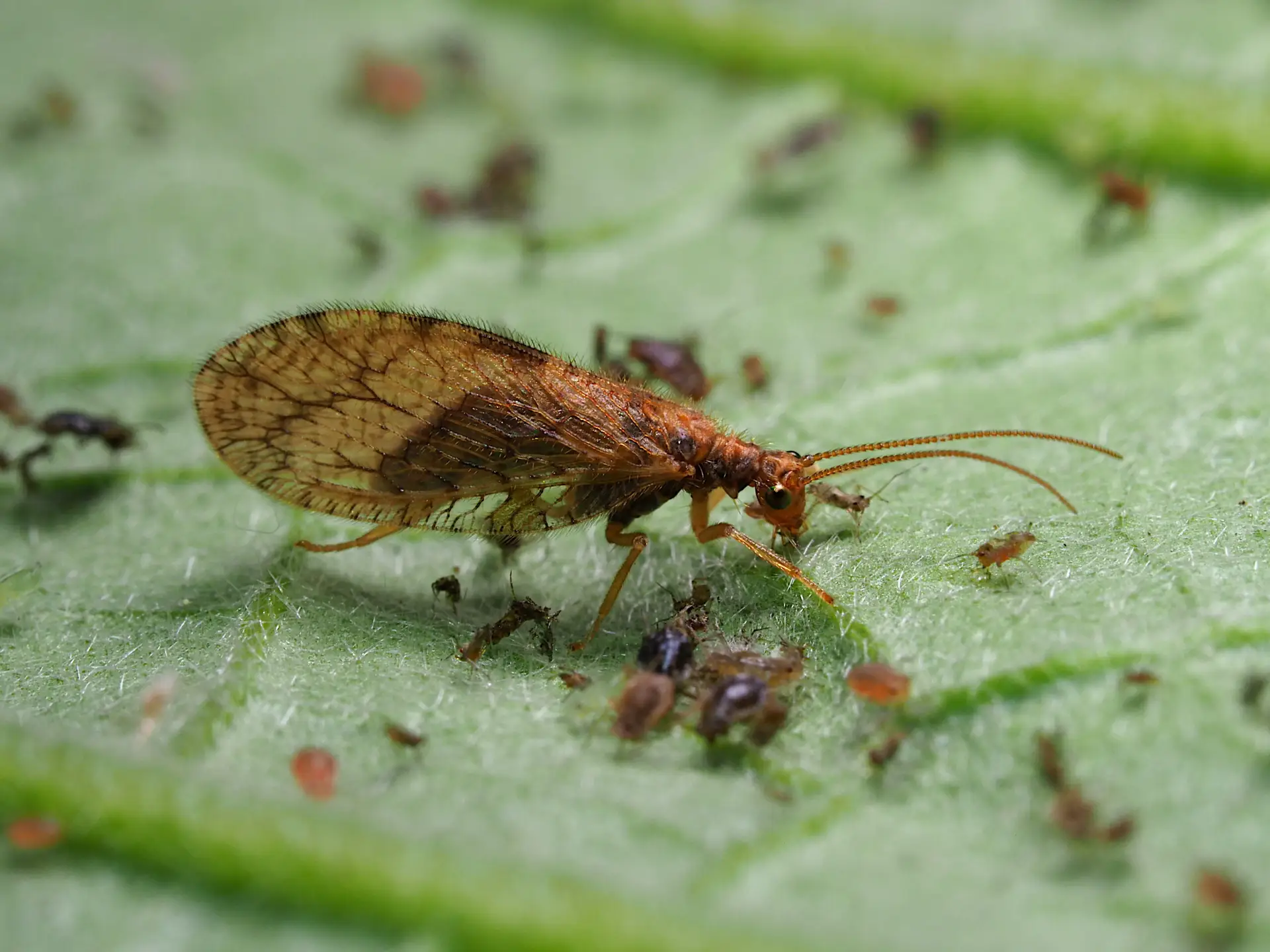
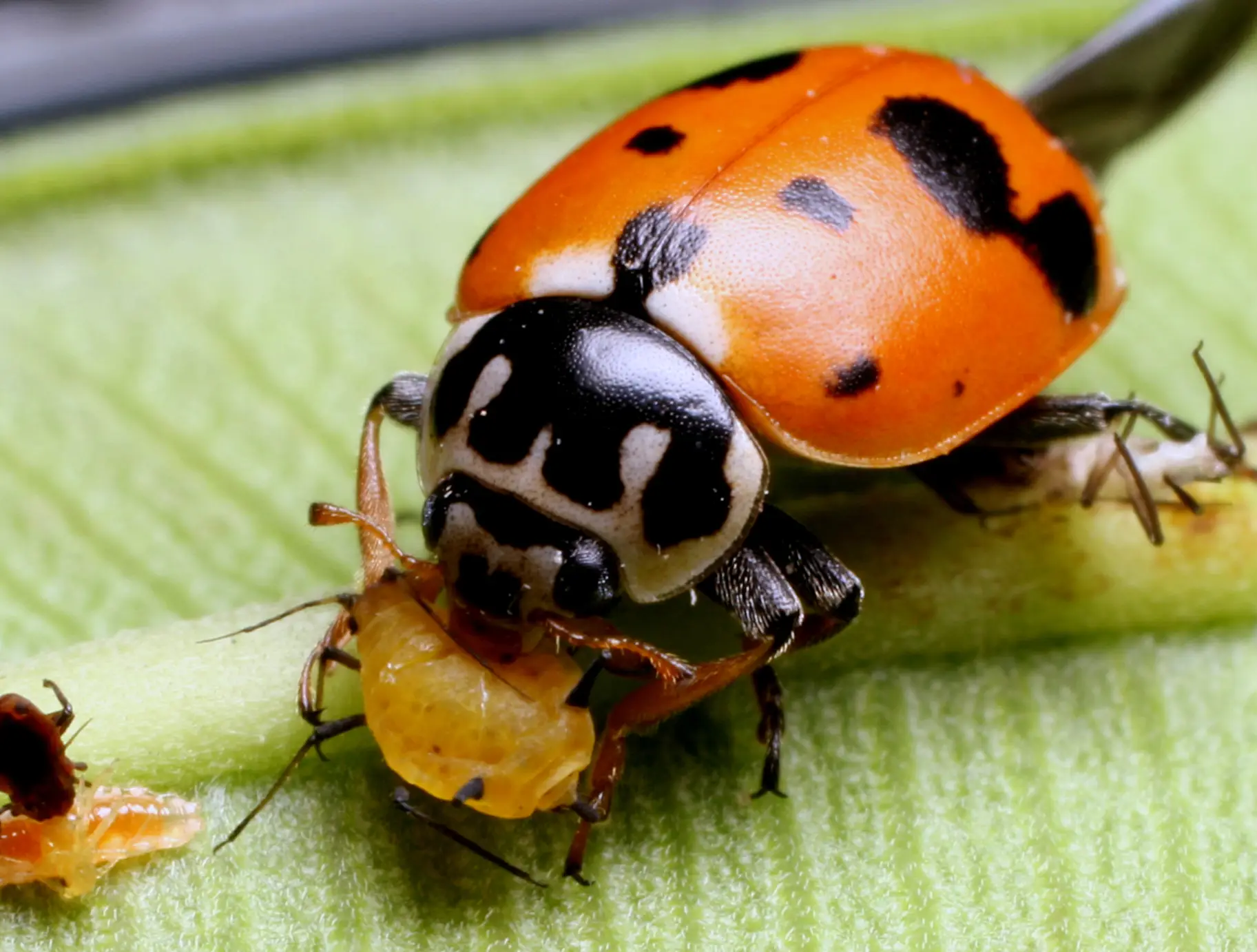
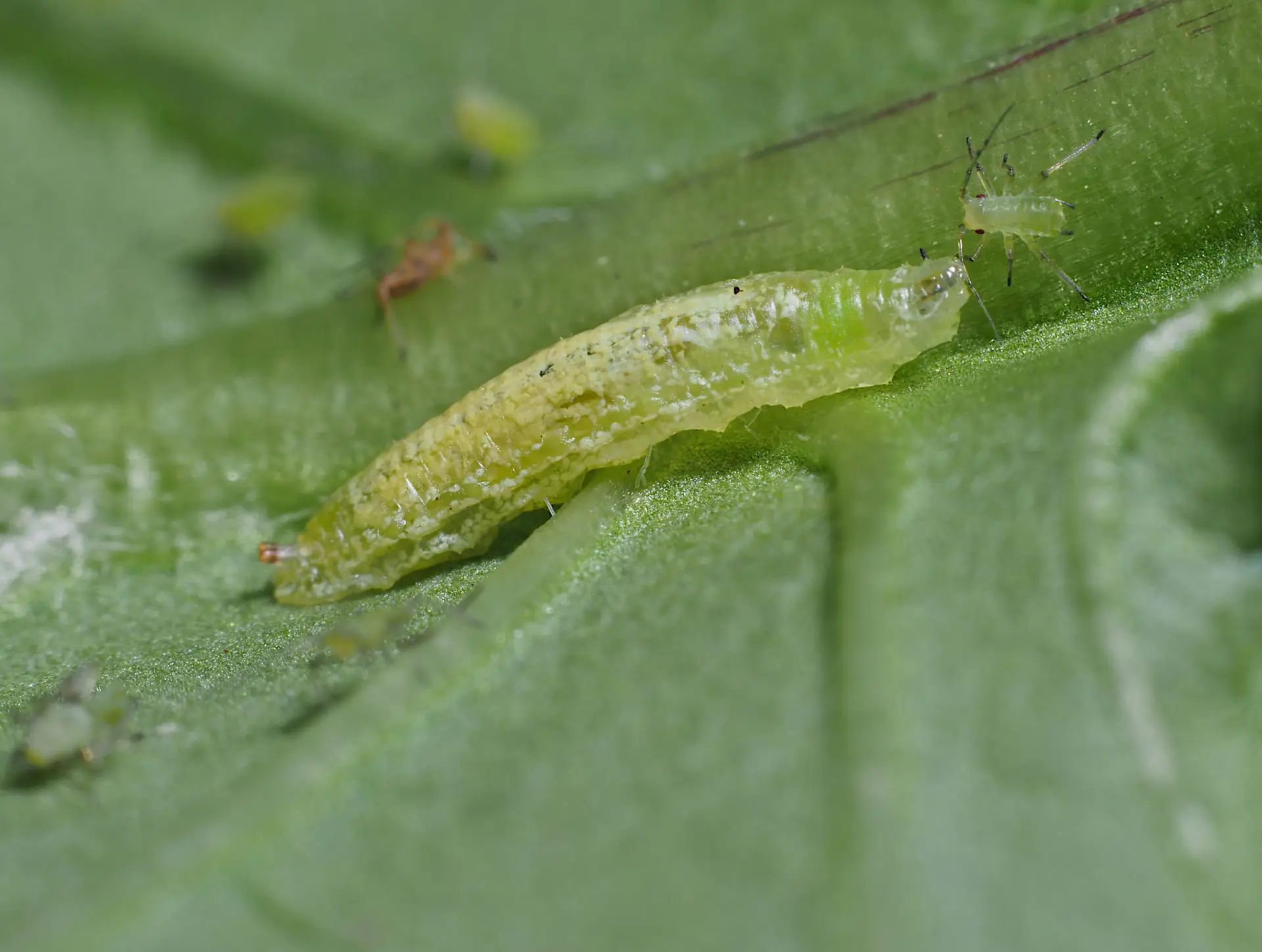
Look out for other beneficial insects active around aphid hotspots, including brown lacewings, ladybirds, and hoverfly larvae.
(Image: Biological Services)
(Image: Biological Services)
(Image: Biological Services)
Are there any high-tech solutions to improve aphid monitoring?
Despite advances in technology, aphid monitoring remains challenging. Most aphid colonies consist of wingless individuals hidden within the crop canopy, while sticky traps sometimes capture winged aphids moving between plants or crops.
Researchers have investigated the use of aphid sex pheromones and alarm pheromones for monitoring, but these approaches have yet to deliver a widely adopted commercial solution. More promising developments include AI-assisted imaging, electronic noses, spectral sensing technologies and regional suction-trap forecasting systems.
In the future, these tools may help identify high-risk areas within crops and direct scouting efforts more efficiently. However, visual crop inspection remains the cornerstone of aphid monitoring and is unlikely to be replaced in the foreseeable future.
What else can growers do to get the most from aphid parasitic wasps?
- Avoid persistent insecticides – Many insecticides with long residual activity can disrupt biological control by killing or impairing aphid parasitic wasps. When planning crop clean-up or end-of-season pest management, involve your IPM consultant or agronomist. The goal is to finish the current season effectively without creating pest management challenges for the next. Broad-spectrum insecticides can also trigger secondary pest outbreaks by eliminating beneficial insects.
- Use targeted aphicide applications – Spot-spray aphid hotspots when necessary to prevent populations from spreading while allowing beneficial insects to establish and multiply. This approach also gives naturally occurring predators, such as hoverflies, ladybirds, damsel bugs and lacewings, the opportunity to contribute to aphid control.
- Consider banker plants and flowering refuges – In the European Union, aphids remain a major pest in low-input and organic production systems, where suitable insecticide options are limited. As a result, banker plant systems are receiving renewed interest as a way to maintain healthy populations of aphid parasitic wasps throughout the growing season. In outdoor crops, floral strips and flowering refuges are also gaining attention for their ability to support beneficial insects and improve biological control.
- Manage ant populations – Ants should be controlled using IPM-compatible methods. Ants protect aphid colonies in exchange for honeydew, often driving away or attacking predators and parasitic wasps that would otherwise help suppress aphid populations.
- Avoid excessive nitrogen fertiliser – Plant nutrition plays an important role in aphid management. Excessive nitrogen can encourage lush, soft growth that is highly attractive to aphids and may accelerate population growth. Integrating nutrition and IPM strategies can help reduce aphid pressure and improve the performance of biological control agents.
Conclusion
Aphids reproduce rapidly, which means biological control programs often struggle when they are introduced too late, not because parasitic wasps are ineffective. Early intervention is critical. Preventing aphid populations from establishing is far easier than trying to regain control after numbers have escalated.
For best results, parasitic wasps should be used as part of a broader IPM strategy. Combining parasitoids with predators such as lacewings and ladybirds provides multiple lines of defence and improves overall control.
It is important to remember that the goal is not to eliminate every aphid. Instead, the aim is to keep aphid populations below damaging levels and prevent them from outpacing the combined action of beneficial insects and other IPM tools. When implemented early and supported by regular monitoring, biological control can provide reliable and sustainable aphid management.
To learn more about the grower benefits of Integrated Pest Management and how Biological Services can help you achieve healthy and sustainable yields through the use of beneficial insects and on-site integrated pest management advice, contact us.
The original article appeared in the Summer 2026 edition of Soilless Australia.